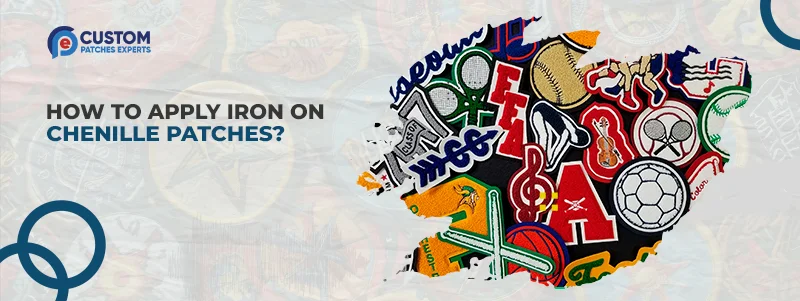
Understand How to Apply Iron-On Chenille Patches?
The patches are made of chenille, which is vibrant and soft and easily noticeable on any piece of cloth. They can be varsity jackets, backpacks, or other items. They look rich and classic, so people notice them right away.
But to make them last, however, you must get them on the right side. When you are in a hurry or skip any step, the patch may fall off or change shape.
This is why this 5-minute guide takes you through everything in a straightforward manner. You will learn how to use iron-on chenille patches so they stay in place and look good for a long time.
Order Your Custom Patch Now!
What Are Iron-On Chenille Patches?
Craftsmen create chenille patches using bulk yarn, making them feel like fur. They are commonly applied to letters, logos and bold designs. The back is adhered to a heat-activated paste, which is applied when you put it between the fabric and iron it. They give a high-end look without any sewing needed. They are very suitable when one wishes to have a fast and clean result.
Custom chenille patches can be used for jackets and coats, hoodies, sweatshirts, denim wear, school uniforms, bags and backpacks. If you are planning to personalize items such as custom patches for vests, chenille patches can give a durable and stylish finish.
How to Use Chenille Patches: A Step-by-Step Guide
Step 01: Prepare the Surface
Begin with putting your garment on a flat surface. Any wrinkles should be smoothed, as the patch’s sticks might be affected by them. Switch off the steam on your iron. Adjust it to the medium-high level of heat. Allow it to boil completely and then proceed to the next step.
Step 02: Position the Patch
Paste the chenille patch in any location you like. Take a moment to adjust it, since when you add heat, it becomes difficult to move. Ensure that it is straight and centered. This is an important step since a slight error at this stage may impact the overall appearance.
Step 03: Cover the Patch
Cover the patch with a thin piece of cloth or parchment paper. This shields the patch as well as the fabric against heat itself. Do not use the iron on the patch without a cover. It is capable of destroying the fibers or scalding the cloth.
Step 04: Apply Heat
The next step is to press the iron on the covered patch. Keep it in position for 20 to 30 seconds. Do not shuffle the iron about. When applying heat to items, like custom patches for backpacks, use firm pressure. Thicker materials require more heat contact. Pick up the iron and find out. Pick up the iron and find out whether the patch is adhering. Otherwise, repeat the process with an interval of 10 to 15 seconds.
Step 5: Let It Cool
After attaching the patch allow it to cool fully. This assists the sticky stuff to dry. Do not touch or bring the patch when it is still hot. This can weaken the bond.
Step 6: Check the Edges
Once cold, examine the edges of the patch, taking care. Should there be any part lifting, repeat heat for a few seconds. Seal off all edges. This is done to counteract the short lifespan of the patch.
Chenille patches are a good fit for daily use in the USA. Because they stay in place and endure regular wear, many people use them on bags.
Custom patches for backpacks are smart choices. They hold up well on tough materials and look good even with regular use.
Need Help To Create Custom Patch
Right Now!
Can You Apply Chenille Patches on Leather?
Leather needs special care. It can be easily destroyed by high temperatures, so be cautious. For custom patches for leather jackets, it’s better to use low heat or sew them on instead of ironing. A heat press with adjustable settings will also give better results. Chenille patches on leather when applied correctly appear high-quality and durable.
Ready to Use Your First Patch?
CATEGORIES
RECENT POSTS


Get A Custom Quote
Frequently Asked Questions
Yes, it is possible to reapply heat should the patch begin to lift or not have been applied completely the first time. All you need to do is to use a cloth and press again.
Yes, and it is better to wash them in cold water inside out in order to keep the patch. To ensure the adhesive is strong, avoid drying it at extremely high temperatures.
Yes, but it requires heat to make the glue looser and can leave residue as well. Take care not to spoil the cloth when taking it off.
Testimonials
Jason Miller
I was impressed that everything was smooth. I received my proof the same day.
Amanda Rodriguez
The staff was very friendly to work with. Helped me adjust my design.
Chris Thompson
Pricing was the most affordable. Great quality for the price.
Michael Harris
I needed my custom patches urgently. Delivered on time as promised.
Danielle Brooks
I really appreciate their customer service. Very professional team.
Kevin Walker
The delivery time was better than expected. Well packed patches.
Rachel Carter
Clear communication. Pricing was fair and quality was beyond expectations.
Brandon Lee
My team ordered in bulk, and everything was perfect. Highly recommended.