How to Make Custom Rubber Patches for Clothing & Gear
It is difficult to ignore custom rubber patches. You must have found them on jackets, backpacks, hats, uniforms, and so on in the United States.
They appear daring, seem powerful, and can withstand longer than most other types of patch. Don’t consider this to be a complex procedure if you want to make your own.
You can make patches look professional, and with the correct actions and concept, you can make them look clean. This manual will guide you clearly so you can start with confidence.
What Are Custom Rubber Patches?
Highly soft PVC is used to make custom rubber patches. This material provides them with a pliable but robust touch. They don’t wear out as fast as fabric patches.
They can handle rough use without losing their shape. This is why many people love them for outdoor gear, uniforms, and everyday clothing. They are also resistant to water, dirt, and heat, making them a good option when used long-term.
Order Your Custom Patch Now!
Why Do People Use Custom Rubber Patches?
There is a reason why rubber patches are notable. Not only do they look better, but they also do better in most circumstances.
They remain bright in color, and their surface is simple to clean by simply wiping off. The other large reason is their modern appearance.
Custom tatami stitch embroidered patches have a classic feel. In contrast, rubber patches offer a sharper, bolder look. This suits them well for brands or designs that would like to make an immediate impact.
Step 01: Design a Basic & Simple Design
It all begins with your design. The patch design must be easy to read. Minor details are not always revealed well in rubber; thus, it is best to stick to the big shapes and distinct lines.
Consider the locations where you will use the patch and what it should convey. When it comes to branding, it is best to keep your logo uncluttered and visible. Should it be the fashion, aim at powerful shapes and colors that stand out.
Step 02: Select the appropriate Size & Shape
The size is important in the appearance of your patch. A small patch can be perfect on a hat, but jackets and bags tend to need something larger.
When designing custom patches for jackets, a larger size makes your design stand out more. The shape also matters. You can either stick to basic shapes such as circles or rectangles or a custom cut that suits your design.
Step 03: Select Colors That Pop
The color selection can make or break your patch. Rubber patches can use many colors, but they may appear untidy with excessive use. Staying with a few contrasting colors is better.
Vibrant and vivid colors tend to be the most effective. They aid the design to be prominent and allow it to be seen more easily at a distance. The patches can also be raised and lowered to create depth in the colors, which look even better.
Step 04: Decide How You’ll Attach It
You must decide on the method of attaching the patch before it is produced. This will depend on your intended usage and intended location.
For clothing, especially custom patches for clothes, sew-on backing is the best choice. It stays secure for a long time. Velcro backing is great for gear that needs patch changes often. Adhesive backing is best when we want quick and easy use.
Step 05: Creation & Production of Molds
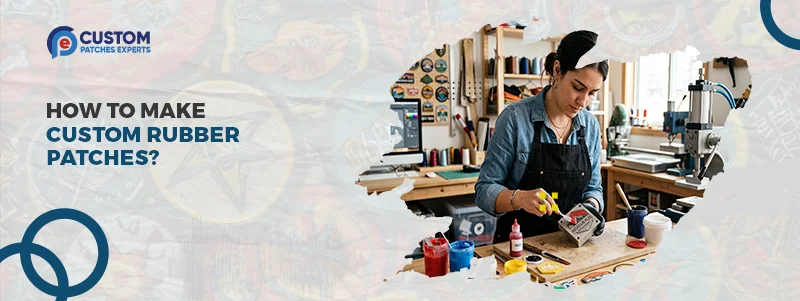
When you are ready with your design, it is time to make that design into a patch. You form a mold according to your design. Next, we pour liquefied PVC into this mold to create the patch.
Designers introduce these colors in coats, and they use heat to cure the material. Once cooled, the patch remains solid and retains its form. We do this to provide clean edges and a good finish.
Most people prefer to hire a professional manufacturer for this measure. It requires special equipment and expertise.
Why Working With Experts Makes a Difference
Rubber patching can be done at home, although it requires effort. It takes the correct instruments, materials, and lots of experimentation.
Even at that, the end result might not be professional. Collaboration with specialists is more time-saving and more effective.
What you receive are clean designs, hard materials, and a polished finish. You can also order in bulk, a great option for businesses or brands.
Most trusted suppliers offer design help, quick turnaround, and free quotes. This makes the process easy and stress-free.
Simple Tips for Better Results
One or two little choices can make a huge difference in your end patch. It is always a good idea to make your design simple since it is easy to understand. Choosing the right thickness improves the feel and makes the patch look more premium.
Before making up the size, it is also a good idea to test the placement. This will save you the trouble of ordering patches that are too small or too big. Getting a sample before bulk production helps you check the quality and make any changes needed.
Need Help To Create Custom Patch
Right Now!
Common Mistakes to Avoid
Most individuals get done with the design phase in a hurry only to regret it. The patch may be difficult to read with excessive detail or very fine text. Bad color choices can also diminish the effect.
Selecting the incorrect size or dealing with low-quality suppliers is another error. Spending a bit more time planning and picking an appropriate partner may save time and money.
Where You Can Use Rubber Patches
Custom rubber patches are highly adaptable. They may be applied to work uniforms, sports equipment, everyday attire, and even advertising.
Not only do they enhance the appearance of what you are carrying around, but also you can establish a good image.
Some brands go as far as incorporating rubber patches with other styles, such as custom tatami stitch embroidered patches in order to have a distinctive blend of both textures and designs.
Create Your Own Patch Now!
It is not as hard to create your own rubber patches with the correct steps. From design to production, each step contributes to the resulting outcome. With a clear concept and strong support, you can create patches that look great and last long.
Are you ready to make custom patches on clothes or gear? You should be ready to take the next step now. Get a free quote today from the Custom Patches Experts. Transform your design into a quality patch. Enjoy fast service and guaranteed results.
CATEGORIES
RECENT POSTS

Get A Custom Quote
Frequently Asked Questions
The custom rubber patches are made from soft PVC. This material is flexible, waterproof, and durable. This causes them to be ideal in clothing and outdoor equipment.
Rubber patches have a life span of up to several years. They are very resistant to heat, water and day-to-day wear.
Yes, you can apply them to clothes like shirts, hoodies, and jackets. Some people use them as custom patches because they last a long time.
Sew-on backing is good in the long run; it is specifically used on clothing. An alternative to this is Velcro so that you can easily remove or change patches.
Embroidered patches seem old-fashioned. They hold less water because they’re made from durable rubber. This material is also more resistant to water. The two styles serve different design purposes. One style is custom tatami stitch embroidered patches.
Yes, you have the opportunity of designing it yourself with a few simple tools or just a sketch. The final result is best achieved with a clean and bold design.
Rubber patches are available in very small sizes up to large custom patches on jackets. Their size varies depending on the way you intend to use them.
Rubber patches are completely waterproof and simple to clean, yes. This renders them ideal for outdoor and tough products.
Depending on the design and the quantity, it takes a couple of weeks or often a few days to produce. Trusted suppliers usually have fast turnaround options.
Most suppliers accept small orders. However, larger volumes usually lower the price per patch. You should request a free quote to get a feel for what you have.
Testimonials
Jason Miller
I was impressed that everything was smooth. I received my proof the same day.
Amanda Rodriguez
The staff was very friendly to work with. Helped me adjust my design.
Chris Thompson
Pricing was the most affordable. Great quality for the price.
Michael Harris
I needed my custom patches urgently. Delivered on time as promised.
Danielle Brooks
I really appreciate their customer service. Very professional team.
Kevin Walker
The delivery time was better than expected. Well packed patches.
Rachel Carter
Clear communication. Pricing was fair and quality was beyond expectations.
Brandon Lee
My team ordered in bulk, and everything was perfect. Highly recommended.